




Ads On
Industrial machines & components > Automation


Messenhäuser Str. 42, Rödermark-Urberach, Deutschland


Messenhäuser Straße, Rödermark-Urberach, Deutschland


Messenhäuser Straße, Rödermark-Urberach, Deutschland


Messenhäuser Straße, Rödermark-Urberach, Deutschland


Messenhäuser Straße, Rödermark-Urberach, Deutschland


Messenhäuser Straße, Rödermark-Urberach, Deutschland


Messenhäuser Straße, Rödermark-Urberach, Deutschland


Messenhäuser Straße, Rödermark-Urberach, Deutschland


Messenhäuser Straße, Rödermark-Urberach, Deutschland


Messenhäuser Straße, Rödermark-Urberach, Deutschland


Messenhäuser Straße, Rödermark-Urberach, Deutschland


Messenhäuser Straße, Rödermark-Urberach, Deutschland


Messenhäuser Straße, Rödermark-Urberach, Deutschland
Automation Equipment Suppliers – Buy Industrial Robots & Automation Systems Online
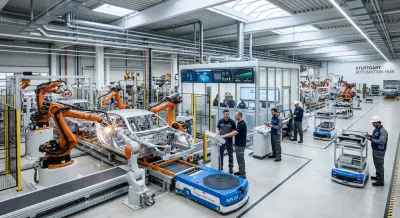
Finding dependable automation equipment suppliers can feel slower than it should. Production engineers need clear payload figures, reach envelopes, cycle times, and control interface details before they can even shortlist options. The same applies when the search turns to industrial robots for sale – whether a new collaborative unit or a used six-axis arm that still has years of service left.
Arico B2B brings verified automation equipment suppliers and robotics specialists onto one industrial marketplace. Listings cover industrial robots for sale, collaborative robots, AGVs, machine vision systems, PLCs, HMI panels, safety technology, and complete robotic cells. Buyers filter by type, condition, and location, then contact the supplier directly. No intermediary markup, no outdated catalogues.
You can Browse automation equipment suppliers right away and start comparing current offers. Related categories such as Industrial machinery suppliers sit one click away when the project expands beyond pure robotics.
Find Reliable Automation Equipment Suppliers Worldwide
Most automation equipment suppliers still rely on a mix of regional distributors, trade-fair contacts, and long-term OEM relationships. That network works until the exact payload, reach, or cycle-time requirement sits outside the usual portfolio. At that point the search stretches across continents and the risk of incomplete technical data rises.
On Arico B2B, automation equipment suppliers publish professional company profiles, list equipment with measurable specifications, and receive inquiries from buyers who have already filtered by robot type, payload class, or control architecture. The platform stays focused on B2B industrial trade – clear technical data first, commercial conversation second.
What separates reliable automation equipment suppliers from the rest?
• Complete company profiles that show location, contact persons, and recent platform activity
• Detailed machine data – payload, reach, axes, control brand, year, hours – rather than vague marketing claims
• Transparent condition statements for every used industrial robot or cell
• Direct communication channels so application engineers can ask the right technical questions
Procurement teams that regularly source industrial robots for sale or complete factory automation equipment no longer rebuild their supplier list from scratch for every project. The platform already concentrates relevant automation equipment suppliers in one searchable place.
Industrial Robots for Sale – New, Used & Collaborative Robots
The market for industrial robots for sale divides naturally into new systems, used units with remaining service life, and collaborative robots designed to work alongside people. New industrial robots for sale bring the latest controllers, full manufacturer warranties, and the longest remaining life. Used industrial robots for sale free up capital and often arrive with tooling, safety fencing, and proven cycle times already documented.
Both streams appear side by side. Listings typically include year of manufacture, approximate operating hours, control system brand and version, payload rating, and current location. This level of detail helps buyers compare industrial robots for sale without repeated clarification calls.
Typical categories of industrial robots for sale include:
• Six-axis articulated robots for welding, material handling, and machine tending
• Collaborative robots / Cobots for sale that share workspace with operators under defined safety conditions
• SCARA and delta robots for high-speed pick-and-place
• Heavy-payload robots for foundry, palletizing, and press-tending applications
• Used industrial robots released from production lines that have been reconfigured or closed
Buyers looking for industrial robots for sale can filter by payload, axes, and condition. Explore industrial robots for sale among the current automation listings, or move to complete cells when integration effort needs to stay low.
Browse Industrial Automation Systems, Sensors, PLCs & HMI
Robots rarely operate alone. Industrial automation systems combine motion control, sensing, operator interfaces, and safety layers into a working cell. Automation equipment suppliers therefore list more than just the robot arm – they also offer the surrounding components that turn a robot into a productive station.
PLC and Control Systems Industrial
PLC and control systems industrial form the backbone of most factory automation equipment. Modern cells rely on programmable logic controllers that coordinate robot motion, conveyor timing, and interlocks. Listings often specify brand families such as Siemens, Rockwell, Mitsubishi, or Beckhoff, together with I/O counts and communication protocols. Buyers evaluating industrial automation systems check whether the existing plant network can talk to the new controller without expensive gateways.
Industrial Sensors and Monitoring & HMI Systems Industrial
Industrial sensors and monitoring equipment detect presence, position, force, and process variables. Proximity switches, vision sensors, torque sensors, and safety light curtains appear regularly among the automation components. HMI systems industrial give operators a clear window into cell status and allow parameter changes without diving into the PLC code. Together these elements determine how quickly a new or used robotic cell can be brought online.
You can Discover industrial sensors, PLCs and HMI systems under the dedicated sensors and control sub-categories, or review safety technology when risk assessment is the next step.
Robotic Arms, AGVs, AMRs & Machine Vision Systems
Robotic arms industrial remain the most visible element of many automation projects, yet mobile robots and vision systems are growing just as fast. AGV and AMR robots move materials without fixed paths or with flexible navigation, while machine vision systems industrial inspect, guide, and measure parts in real time.
Robotic Arms Industrial and Robotic Cells for Sale
Robotic arms industrial appear both as standalone units and as part of complete robotic cells for sale. A complete cell usually includes the robot, end-of-arm tooling, safety fencing or light curtains, a base frame, and often a vision or force-sensing package. Buyers who need rapid deployment tend to prefer cells that already carry documentation for the original application, even if the new process will differ.
AGV and AMR Robots plus Machine Vision Systems Industrial
AGV and AMR robots handle internal logistics that used to require dedicated forklift traffic or fixed conveyor runs. Autonomous mobile robots can be reprogrammed for new routes far more easily than traditional AGVs that follow magnetic tape or wires. Machine vision systems industrial close the loop between robot motion and part quality – checking orientation before pick, verifying assembly after place, or rejecting defects before they travel further.
View collaborative robots and robotic arms together with mobile platforms under the same automation category. When material handling scale increases, many buyers also review Forklifts & industrial trucks or warehouse conveying systems for hybrid solutions.
Used Industrial Robots & Complete Robotic Cells Available
Used industrial robots and complete robotic cells available on the platform often come from plants that have changed product mix or consolidated lines. The mechanical structure of a well-maintained industrial robot remains serviceable for many years after the original controller has been updated or the application has shifted. Buyers who evaluate used industrial robots look first at remaining gearbox life, encoder health, and the availability of spare parts for the control generation.
Complete robotic cells for sale reduce the engineering hours needed to restart production. A cell that already includes safety technology automation, tooling, and a documented cycle time can move from the seller’s floor to the buyer’s floor with far less redesign. Documentation quality varies – the strongest listings include original manuals, electrical drawings, and a clear statement of the last application.
Find used industrial robots and robotic cells among the current offers, then compare them with new industrial robots for sale when residual life or warranty coverage becomes the deciding factor.
Why Choose Arico for Automation & Robotics Trading
Arico B2B is built as a permanent online trade fair for industrial equipment. Automation equipment suppliers list robots, cells, sensors, and control packages with the same technical transparency expected at a physical exhibition. Buyers reach the supplier in one step. The platform does not insert itself into the commercial contract; it simply makes the first contact faster and more precise.
Because the category sits inside the broader industrial machines section, related searches stay inside the same ecosystem. A buyer who starts with industrial robots for sale can move to packaging machines for industry or to warehouse equipment without opening a new browser tab and losing context.
Complete Automation Solutions – Sensors, Safety Technology & Control Systems
Factory automation equipment rarely stops at the robot. Safety technology automation – light curtains, safety relays, door interlocks, and emergency-stop circuits – must match the risk assessment of the final cell. Industrial automation components such as servo drives, remote I/O, and industrial network switches complete the architecture. Automation equipment suppliers who list these elements alongside the robots make it easier for buyers to assemble a coherent technical package.
For independent technical background on machinery safety and CE marking requirements, many engineers consult the Federal Institute for Occupational Safety and Health. Their guidance on the Machinery Regulation helps clarify what documentation must travel with any industrial robot or cell placed on the European market.
Further reading on occupational safety for industrial machinery is available from the BAuA – Federal Institute for Occupational Safety and Health.
Collaborative Robots (Cobots) and Industrial Robot Integrators
Collaborative robots / Cobots for sale have changed the economics of many smaller automation projects. Lower payload models can be deployed without full safety fencing when the risk assessment allows, reducing both floor-space demand and installation time. Robotics integrators B2B who specialise in cobot applications often appear as suppliers on the platform, offering either standard packages or application-specific tooling.
When the application grows beyond a single cobot, industrial robot integrators B2B become the practical next contact. They combine robot selection, tooling design, PLC programming, and safety validation into one delivery. Some integrators list both new and used industrial robots for sale together with their engineering services, giving buyers a single conversation partner for the entire cell.
Factory Automation Equipment for Production Lines
Factory automation equipment for production lines includes the robots themselves plus the conveyors, palletizers, inspection stations, and buffer systems that surround them. Buyers equipping a new line or expanding an existing one often need to see industrial automation systems as a set rather than as isolated machines. The platform supports that view by allowing suppliers to list complete cells and by placing related categories – packaging machines, conveying technology, warehouse equipment – in easy reach.
See all automation and robotics equipment on the category page, or step across to Related: Packaging machines for industry when end-of-line automation is part of the same project. For internal logistics scale-up, Related: Warehouse equipment and conveying systems provides the next set of options.
Key Product Families in Automation & Robotics
Standards, Safety and Practical Selection Criteria
Selecting industrial robots for sale or complete automation systems requires more than matching payload and reach. Control compatibility, safety category, residual risk documentation, and spare-parts availability all influence the real cost of ownership. International standards for industrial robots and robot systems provide a common reference language; many buyers and automation equipment suppliers therefore work to the same ISO frameworks when specifying performance and safety.
The International Organization for Standardization maintains the core technical committees for industrial robots and related safety requirements. Overview information is available at ISO. For European machinery legislation and CE marking practice, the Federal Institute for Occupational Safety and Health remains a primary institutional source.
Practical selection criteria that appear repeatedly in successful purchases:
• Payload and reach matched to the actual part geometry and process path, not only to the catalogue maximum
• Control generation still supported by the original manufacturer or a capable third-party service network
• Clear residual-risk documentation and safety technology automation already integrated or easily added
• Availability of teaching pendant, backup software, and mechanical spare parts
• Physical footprint and interface dimensions that fit the planned cell layout
German and European industry associations also publish market and technology overviews that help buyers understand current capability levels. The VDMA, for example, covers machinery sectors that include automation and production systems; their material is useful background when comparing technology generations.
Industry association resources can be reviewed via the VDMA website.
How Buyers and Suppliers Work on the Platform
Automation equipment suppliers register a company profile, upload technical data sheets or photos, and set the commercial terms they prefer – request-for-quote, fixed price, or inspection by appointment. Buyers create a free account, filter the automation category, and send structured inquiries. Both sides receive notifications when a match occurs. The subsequent negotiation, inspection, and contract remain between the two parties.
Because industrial robots for sale and factory automation equipment often require site visits or remote video inspection, many listings already note whether the machine is under power and available for demonstration. That single piece of information saves weeks of scheduling friction.
Start with Browse automation equipment suppliers or Explore industrial robots for sale and move outward to related industrial categories as the project scope becomes clearer.
Frequently Asked Questions
What types of industrial robots for sale appear most often?
Six-axis articulated robots dominate the listings, followed by collaborative robots, SCARA units, and occasional delta or heavy-payload systems. Used industrial robots from established brands appear regularly because their mechanical platforms retain value long after the original application ends.
Can I find complete robotic cells for sale, not just the robot arm?
Yes. Complete robotic cells for sale that include tooling, safety fencing, and documentation are listed alongside individual robots. These packages reduce the engineering effort required to restart a process and are particularly useful when production needs to resume quickly.
How do collaborative robots differ from traditional industrial robots?
Collaborative robots / Cobots for sale are designed to share workspace with people under defined safety conditions. They typically carry lower payloads, include force and torque limiting, and can operate without full perimeter fencing when the risk assessment permits. Traditional industrial robots usually require safeguarded zones.
Are PLC and control systems industrial available separately?
Yes. PLC and control systems industrial, HMI systems industrial, industrial sensors and monitoring packages, and safety technology automation appear both as standalone listings and as part of larger automation cells. Buyers can source the control layer independently when they already own the mechanical equipment.
How does Arico B2B differ from a conventional machine dealer?
Arico B2B is a marketplace, not a dealer. Automation equipment suppliers list their own inventory; the platform provides the visibility, search tools, and direct contact channel. Commercial terms, inspection, and contracts stay between buyer and supplier.
Where can I look for related material-handling equipment?
Forklifts and industrial trucks, warehouse equipment, and conveying systems sit inside the same industrial machines section. Use the links to Related: Forklifts & industrial trucks or the broader industrial category when the automation project includes logistics scale-up.
Whether the next requirement is a single collaborative robot, a used industrial robot with proven cycle time, or a full factory automation package, the category concentrates the relevant automation equipment suppliers in one place. Filter, inquire, and move the technical conversation forward without restarting the supplier search from zero.